Press Release
Novo Nordisk and UNICEF have jointly announced a four-year expansion of their global partnership to help prevent childhood overweight and obesity, aiming to support a healthier start in life for more than 80 million children. Novo is committing US$18 million from 2026 to 2030 to advance evidence-based policies and prevention services in seven priority countries. The expansion arrives at a turning point in global child health: childhood obesity has now surpassed underweight globally for the first time on record, according to UNICEF’s 2025 Child Nutrition Report.
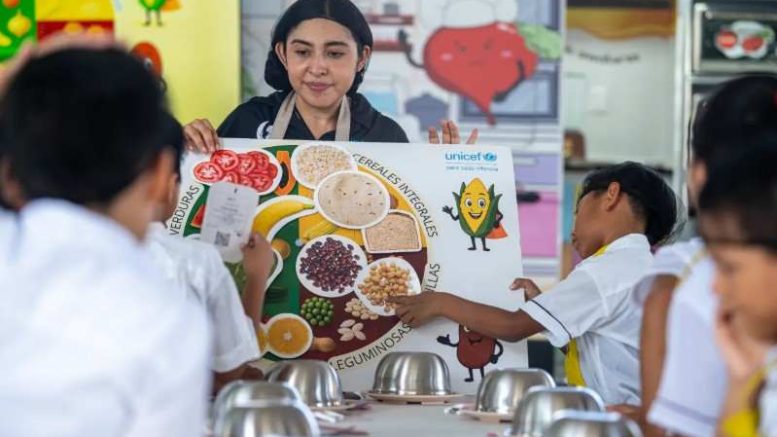
From 2026 to 2030, the partnership will support governments to create environments that ensure healthier options are more accessible to children and families—from the food that is offered and promoted to children, to the schools, cities and health services they rely on every day.
“It is concerning that childhood obesity has surpassed underweight, affecting 1 in 10 school-aged children and adolescents globally,” said Kitty van der Heijden, Deputy Executive Director, Partnerships, UNICEF. “The moment to act is now. Through our partnership with Novo, UNICEF will work with governments to turn evidence into policies, build services, and create environments that protect children early, so every child has a fair chance to eat well, move, feel supported and grow up healthy.”
“Preventing childhood obesity requires long-term, collective action to create healthier environments for children,” said Elin Jäger, chief of staff and head of CEO Office, Corporate Strategy and Sustainability, Novo. “Through our continued partnership with UNICEF, we want to support proven prevention approaches that can become part of the systems children rely on every day, helping create healthier environments for more than 80 million children.”
Building on joint progress since 2019
Since 2019, Novo and UNICEF have helped raise childhood overweight and obesity from an under-recognized issue to a growing global policy and public health priority. Building on this foundation, the next phase of the partnership will deepen efforts in existing countries and expand to new contexts, combining evidence-based policy advocacy, technical assistance, youth-led advocacy and peer support, and social and behavior change communication.
Scope of the expanded program
The expanded program will support action in Mexico, Colombia, Indonesia, the Philippines, India, Egypt and Kenya, while accelerating learning across regions. Interventions will include:
Growth monitoring
Nutrition and physical activity counselling Peer and family support Community- and facility-based prevention activities Youth advocacy Basic mental health screening and support Legislation to promote better diets and healthy food Success will be measured by the number of children reached by evidence-based prevention policies and interventions. Progress and challenges will be reported transparently.
The scale of the challenge
Childhood overweight and obesity now affect around 35 million children under 5 and more than 391 million children and adolescents aged 5 to 19, with 81% of them living in low- and middle-income countries. The impacts can be immediate and lifelong, increasing the risk of early-onset type 2 diabetes and other non-communicable diseases, while also affecting children’s wellbeing through stigma and discrimination.
Delivery will be country-led and anchored in UNICEF’s Centres of Excellence model, led from Nairobi with satellite support in Bangkok and Panama.